England is the home of the modern flush toilet; the „water closet“ (WC). As early as 1596, the Englishman Sir John Harrington developed the first toilet of this kind, but it quickly fell into oblivion. In 1775, the Scottish mechanic Alexander Cumming then invented the S-shaped drain pipe (siphon), which is still commonly used in a similar form today.
The commercial breakthrough for the water closet only came in 1851, when the industrialist George Jennings provided the first public toilet at the Great Exhibition in Crystal Palace in Hyde Park, London. The use of this cost 1 penny. (The current value of this could be estimated at about GBP 0.60 according to “Measuring Worth” ). According to Wikipedia this was enthusiastically used by almost 830,000 visitors. No wonder the phrase ‚to spend a penny‘ became synonymous with a visit to the toilet!
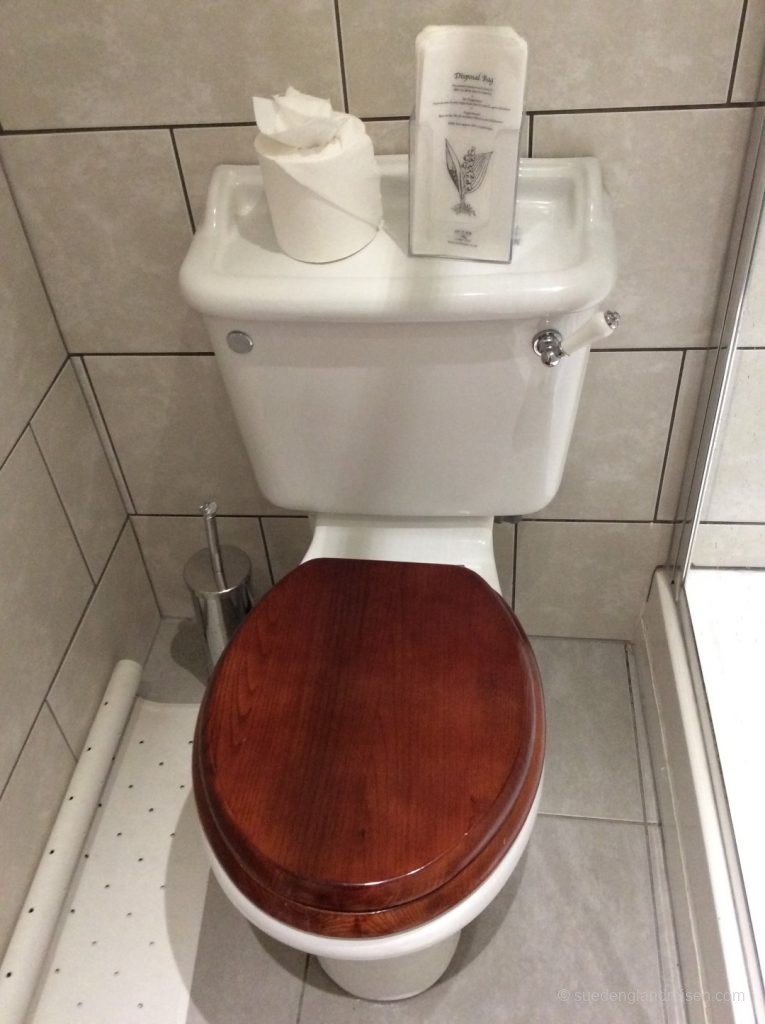
Traditional Water Closet (WC)
It is interesting that in England, the original versions of major inventions are still partly maintained today, whereas in other countries they have often been significantly developed. The best example is faucets. While the single-lever mixer has become standard worldwide, it is still considered rather exotic in England, and even in new buildings. People prefer to stick with the traditional two taps for hot and cold water in a conventional design:
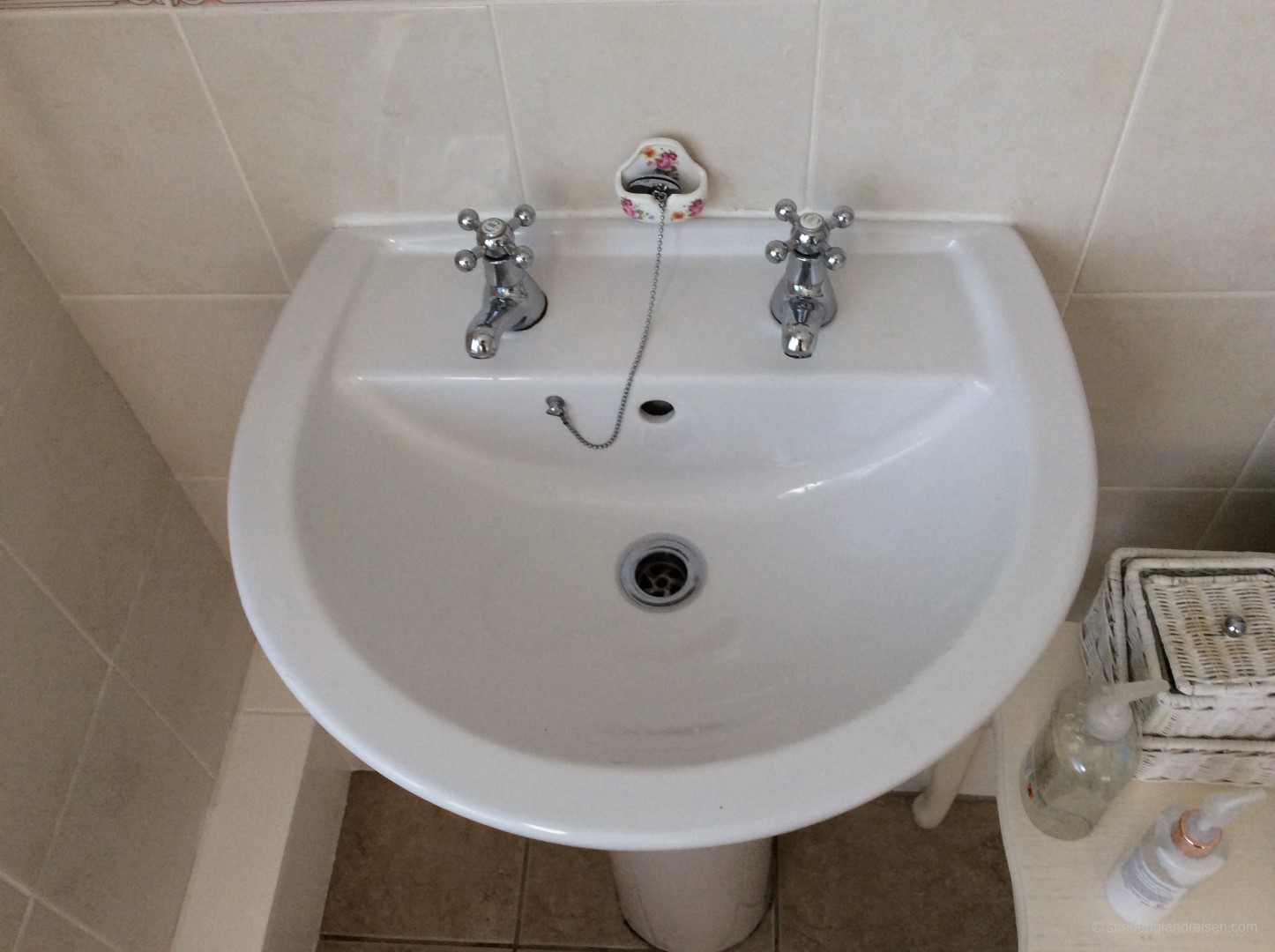
Traditional Taps
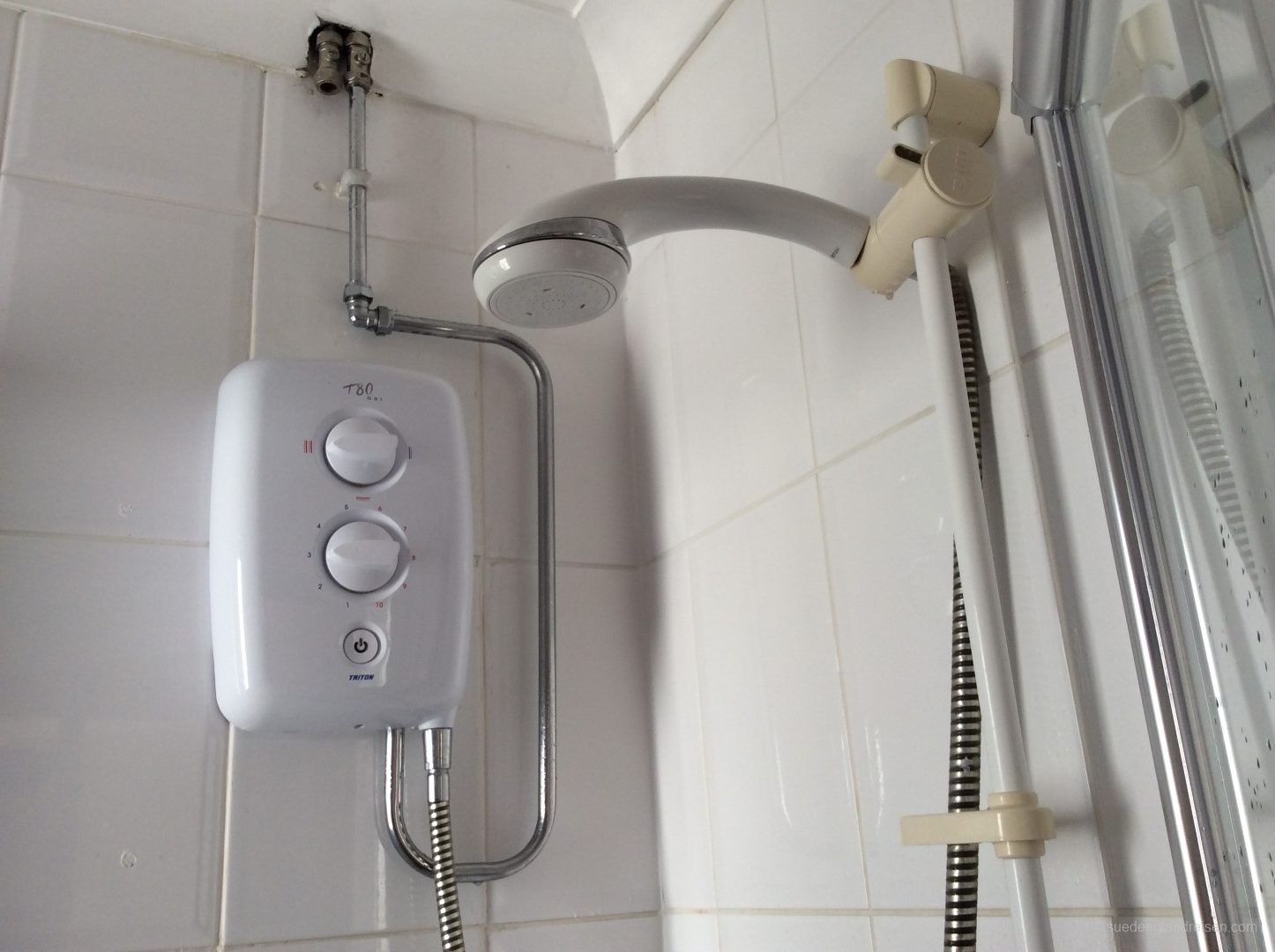
A special feature is also the hot water supply for the shower. There is often no central boiler or water heater. Instead, an electric instantaneous water heater powered by regular electricity is used directly in the shower. What seems like a good idea – having warm water always available on demand – is in reality a health-promoting alternation between warm and cold water. First of all, it takes time for the device to reach the temperature necessary to heat the water, and then many devices can’t achieve a high flow rate. If you don’t want a tiny spa bath, you will still get hot water now and then, but at certain intervals, noticeably colder water as well. So don’t be surprised why the English are so healthy and can swim so easily even in cold sea water!
Instant Water Heater for the Shower
Another practical tip: In England, it is common for electrical devices to be disconnected from the power supply when not in use. For this reason, sockets have a built-in switch which makes this work without any problems. There also has to be a separation switch in showers, but this is not always easy to install due to the position of the tankless water heater. Therefore, a pragmatic solution has been found: A cord hangs down from the ceiling, which is attached to a small box. When you pull on it, the power for the instantaneous water heater and usually also for the extractor fan is switched on. After showering, the switch is pulled again and the electricity and fan are safely turned off.
Please don’t be surprised if only cold water comes out during your first shower – you have probably have not pulled the cord! (This is understandable, as we only know these pull-cords from hospitals, etc., and they are an emergency device when calling for help!)
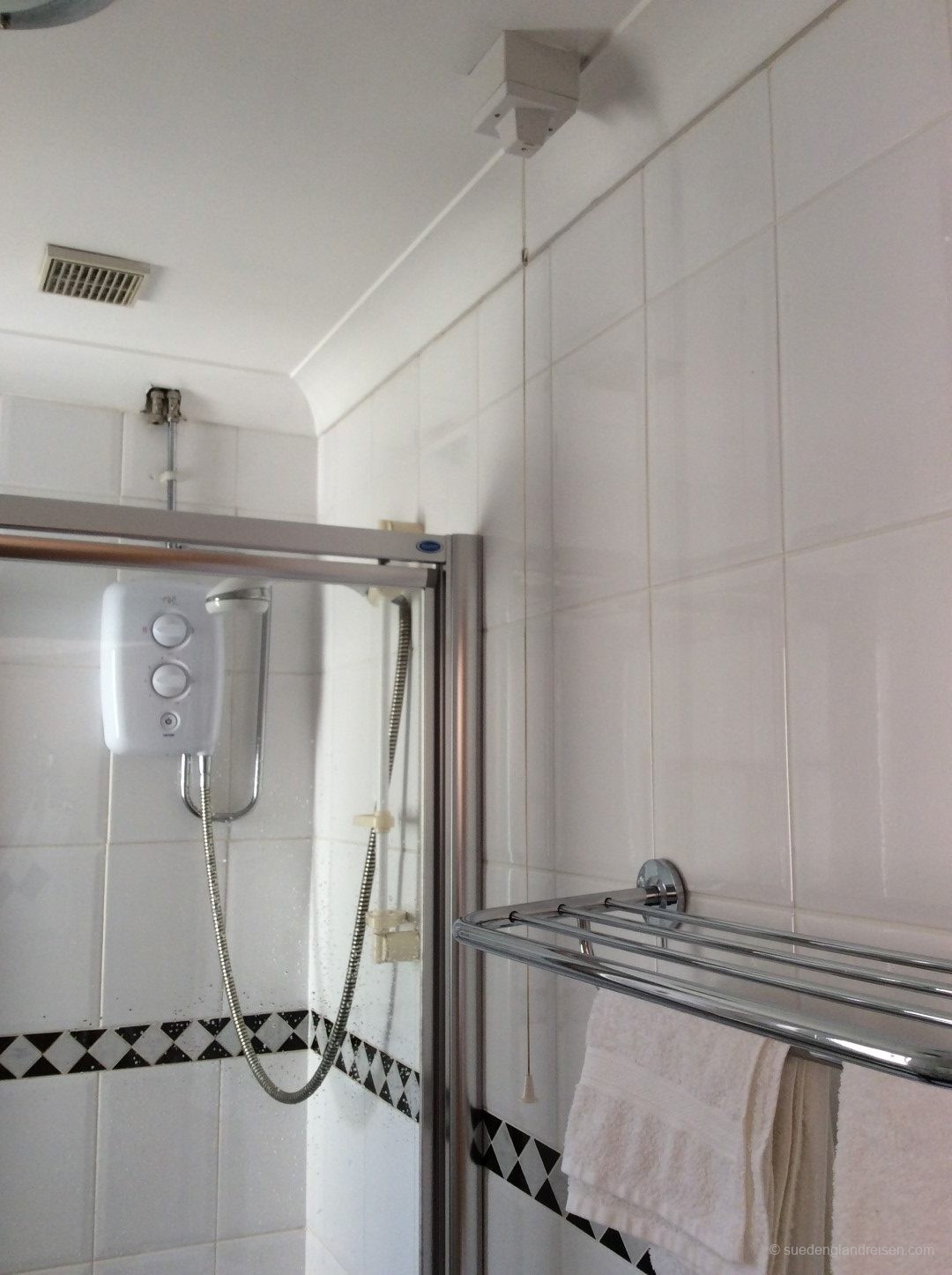
Shower with Main Switch (Cord in the Foreground)